
Mesenchymal Stem Cell Therapy
Your program includes the administration of verified mesenchymal stem cells, dosed and delivered based on your case. Mesenchymal stem cells, usually shortened to MSCs, are among the most extensively studied cell types in medicine. Thousands of clinical trials worldwide have examined them, and the body of published work stretches back decades.
What follows is a plain account of what they are, how they are understood to work, what varies between providers, and what we do about it.
Free consultation with a care consultant, many of our care consultants are registered nurses. No sales reps. No receptionist.

What actually makes a cell an MSC
This matters more than it sounds, because the term gets used loosely.
The International Society for Cell and Gene Therapy established minimum criteria for identifying MSCs. A population must adhere to plastic in standard culture conditions. It must express the surface markers CD73, CD90, and CD105, while lacking hematopoietic markers such as CD45, CD34, CD14, CD19, and HLA-DR. And it must be capable of differentiating into bone, cartilage, and fat lineages under laboratory conditions.
Those criteria exist because without them, almost any cell preparation could be labeled mesenchymal. When a provider tells you their product contains MSCs, the reasonable follow-up is how that was verified and against which markers. A preparation that has not been characterized against defined criteria is a preparation of unknown composition.
Free consultation with a care consultant, many of our care consultants are registered nurses. No sales reps. No receptionist.
How they are understood to work
The intuitive assumption is that stem cells replace damaged tissue directly. That is not the prevailing understanding of how MSCs behave.
The research points overwhelmingly toward paracrine signaling. MSCs release a range of soluble factors, including growth factors, cytokines, and extracellular vesicles, that influence the behavior of surrounding cells. They are studied for their interaction with inflammatory signaling and with the local tissue environment rather than for direct structural replacement.
This also explains a finding that surprises people. Relatively few administered cells persist in the body for long. The scientific interest is in what they signal while they are present, not in whether they remain. Any provider describing MSCs as rebuilding your tissue is describing a mechanism the literature does not support.
Free consultation with a care consultant, many of our care consultants are registered nurses. No sales reps. No receptionist.
Source matters, and here is why
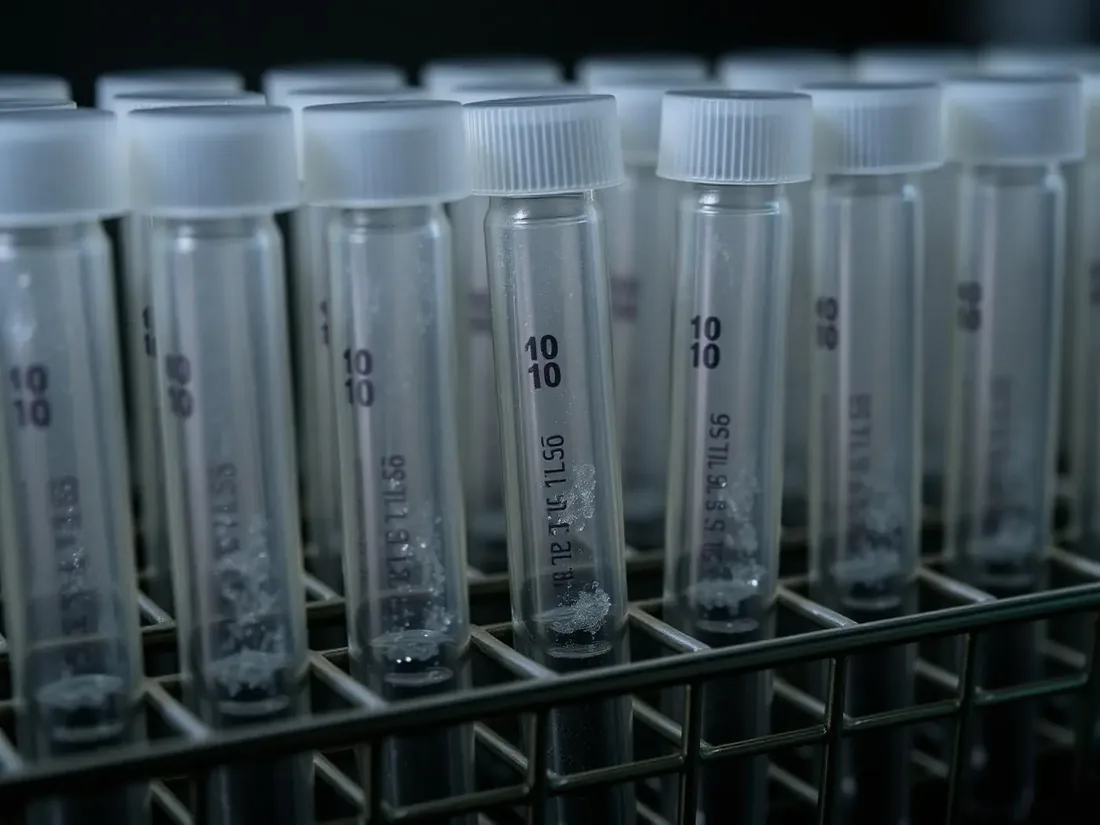
MSCs are obtained from several tissues, and they are not interchangeable.
Bone marrow-derived MSCs are the most historically studied. Adipose-derived MSCs are obtained in higher yield and have shown stronger anti-inflammatory and immunomodulatory activity in comparative analyses. Umbilical cord and Wharton's jelly-derived MSCs come from birth tissue and are typically younger cells.
There is also the autologous versus allogeneic distinction. Autologous means your own cells, harvested and returned. Allogeneic means donor cells from a screened source. Each carries different considerations around availability, processing time, donor screening, and immune response. Which applies to your protocol is a clinical decision made against your case, not a product preference.
Free consultation with a care consultant, many of our care consultants are registered nurses. No sales reps. No receptionist.
Why cell count alone tells you very little
Providers advertise cell counts because the number is easy to market. It is also close to meaningless on its own.
Total nucleated cell count measures every cell with a nucleus in a sample. That includes dead cells, debris, and cell types with no relevance to the preparation. A large total nucleated count can accompany a small population of viable, functional cells.
What matters is viability, which measures how many cells are alive at the point of administration, and functional assays such as colony-forming unit measurement, which measure how many cells are actually capable of doing anything.
This is why we document verified cell count alongside viability, and why a number quoted without both is a number you should question.
Free consultation with a care consultant, many of our care consultants are registered nurses. No sales reps. No receptionist.
Where ours come from and how they are handled
The biology of stem cell therapy is well documented. What varies between providers is the quality of the cells and the discipline around them.
Aurenza holds several COFEPRIS licensed laboratories in active comparison and runs quality analysis on a recurring basis. Every batch is tested for viability, verified cell count, and cell type. A batch that does not meet specification is not used.
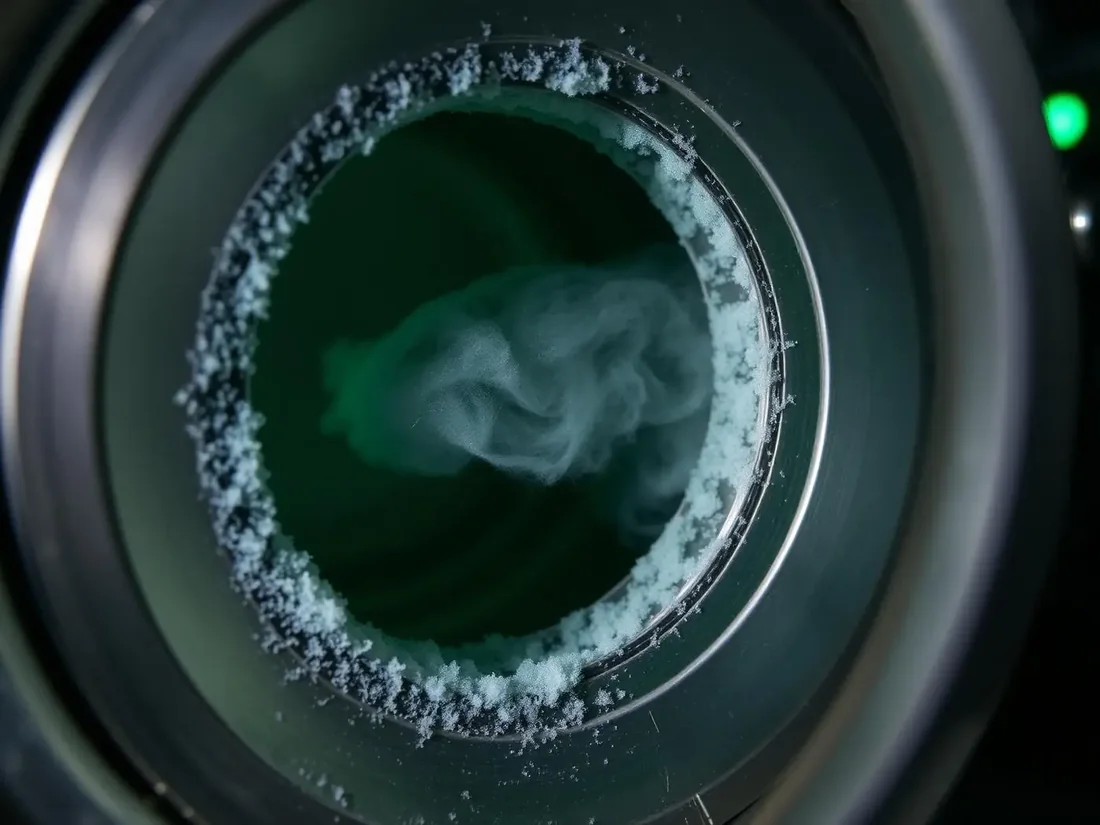
Cells requiring cryopreservation must be held in vapor-phase liquid nitrogen below minus 150 degrees Celsius, with controlled-rate freezing and continuous temperature monitoring. A broken cold chain ruptures cell membranes, and what arrives is debris rather than a viable product. Our cells are held in cryogenic storage that Aurenza owns and operates, and thawing is timed to your administration rather than to a shipping schedule. The chain from laboratory to point of care stays short and unbroken.
Free consultation with a care consultant, many of our care consultants are registered nurses. No sales reps. No receptionist.
How dose and delivery are decided
The number of cells is one input, not the whole picture. The dose, the sites, and the delivery route are selected by your physician based on your baseline, your imaging, and the conditions identified in your evaluation.
Delivery route matters to the protocol. Intravenous administration distributes systemically, with a substantial first-pass effect through the lungs. Targeted administration into a specific structure places the product where the concern is. Which route applies depends on what is being addressed, and that decision belongs to a physician working from your case rather than to a menu.
This is why the same therapy is applied differently from one person to the next.
Free consultation with a care consultant, many of our care consultants are registered nurses. No sales reps. No receptionist.
What to expect
Administration takes place during your clinical days, under direct clinical oversight, as one coordinated part of your program rather than an isolated event. It is preceded by your priming protocol, which prepares the environment the cells are placed into, and followed by a structured year of integration and follow-up.
Before anything is administered, you know what it is, where it came from, why that specific preparation was selected for your case, and what your clinical team will be tracking afterward.
Free consultation with a care consultant, many of our care consultants are registered nurses. No sales reps. No receptionist.
There are no guarantees in stem cell therapy, and we will always be direct with you about that. These applications are not FDA approved in the United States, and evidence quality varies considerably by application.
What we can control is the quality of the inputs, the preparation of your biology, and the discipline of the follow-through. Those are the conditions that give the work its strongest foundation. They are not a promise of a result, and nothing here should be read as one.
Free consultation with a care consultant, many of our care consultants are registered nurses. No sales reps. No receptionist.