
Alzheimer's is one of the most active frontiers in regenerative medicine, and the newest data is encouraging.
For years, Alzheimer's research produced more disappointment than progress. Regenerative medicine is changing the tone. The newest controlled trials are safe, well tolerated, and producing signals in the brain itself that are getting the field's attention. This is early, and it is genuinely promising.
Here is what the research shows across stem cells, Muse cells, and exosomes, and how a candidacy review determines whether it applies to you.

Aurenza does not claim that regenerative medicine treats, cures, reverses, or slows Alzheimer's disease or any dementia. Individual results vary.
Free consultation with a care consultant, many of our care consultants are registered nurses. No sales reps. No receptionist.
What the Research Shows

The headline result is recent and strong for an early trial. A randomized, double-blind, placebo-controlled trial in Nature Medicine (2025) gave 49 patients with mild Alzheimer's allogeneic mesenchymal stem cells. The therapy was safe, with no brain-swelling signals of the kind seen with some drug therapies. And the exploratory findings were striking: cognition on the MoCA scale favored treatment, whole-brain shrinkage was about 48% slower than placebo, and hippocampal loss, the memory center, was about 62% less. Slowing brain atrophy is exactly the effect this field has been chasing.
Earlier work points the same way. A phase 1 trial in Alzheimer's and Dementia (2023) found the treatment safe and reported a cognitive improvement on the MMSE in the low-dose group alongside a hippocampal-volume signal, and a phase 1 study in Alzheimer's Research and Therapy (2021) showed that delivering cells produced measurable drops in the spinal-fluid markers tied to the disease.
Regenerative medicine's newer tools are already in human study here too. Muse cells are in human studies in other neurological conditions, and MSC-derived exosomes have reached a first-in-human study of intranasal delivery in Alzheimer's, reported in General Psychiatry (2023), a needle-free route directly to the brain that was well tolerated with an early cognitive signal. The toolkit is expanding, not standing still.
What the Evidence Does and Does Not Yet Show
The honest and optimistic summary: regenerative approaches to Alzheimer's are safe in the trials run so far and are producing brain-level signals, slower atrophy, preserved hippocampal volume, that are genuinely encouraging in a field starved of good news. These are early-phase results, and the strongest of them are exploratory rather than final proof, which is precisely why careful patient selection matters. Muse and exosome approaches are earlier still and best understood as emerging. Established care, including approved medications, remains part of any plan and is never replaced.
Why This Is Exactly Where a Candidacy Review Comes In
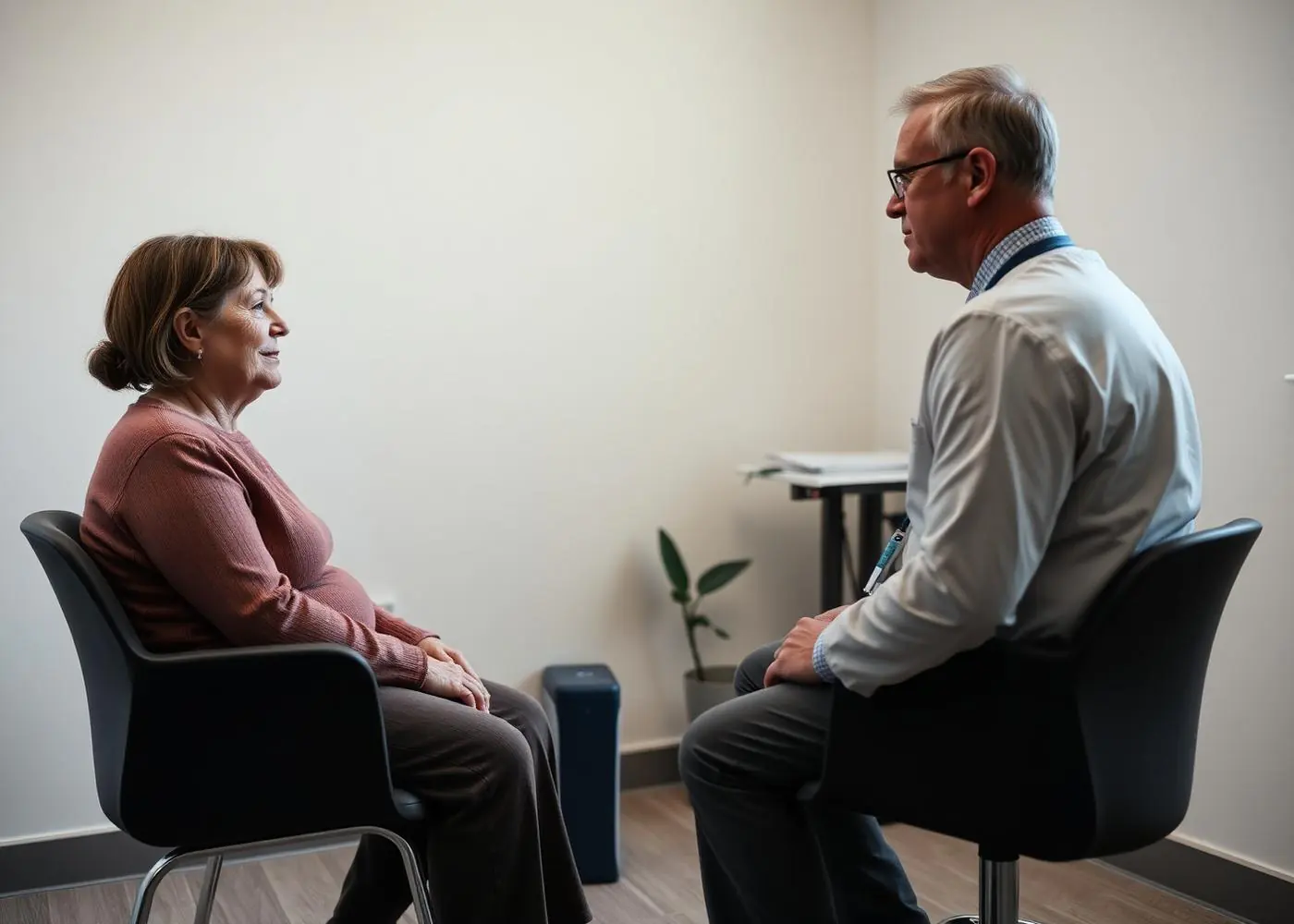
The type of dementia, how far it has progressed, and whether reversible contributors have been ruled out decide whether this research applies to you, because not all dementia is Alzheimer's and the trials studied specific patients. That is the gap between what is published and what is right for you, and it is what a candidacy review closes. Your diagnosis, workup, and current care are reviewed by a physician panel, coordinated with your treating physician, so any recommendation is matched honestly to your situation. That is where to start.
Free consultation with a care consultant, many of our care consultants are registered nurses. No sales reps. No receptionist.
What Your Candidacy Review Covers
Your specific diagnosis and workup, including whether it is Alzheimer's and whether reversible contributors have been excluded.
Your current stage and function, which shape what an approach could realistically address.
Your established care, including approved medications and support, which nothing here replaces.
Your goals, assessed honestly against early-phase evidence.
Your case is reviewed by a physician panel, with neurology input, coordinated with your treating physician and family.
What to Ask Any Provider
Is my diagnosis confirmed as Alzheimer's, and has my workup ruled out reversible causes? Which trials support what you are proposing, and what did they measure? Are you proposing stem cells, Muse cells, or an exosome approach, at what verified cell count and by what route? Will you coordinate with my treating physician? What would make me a poor candidate?
The Honest Limits
Individual results cannot be predicted or guaranteed. No cell therapy is FDA approved for Alzheimer's or any dementia, the evidence is early-phase, and any procedure takes place in Mexico under COFEPRIS regulation, which is not equivalent to FDA approval. Continue all prescribed dementia care under the direction of your treating physician.
Free consultation with a care consultant, many of our care consultants are registered nurses. No sales reps. No receptionist.
Free consultation with a care team member; many are registered nurses. No sales reps. You speak with a care team member from the first call.