
Multiple sclerosis is where regenerative medicine has been tested most rigorously in neurology.
Of every condition in this field, MS is where cell therapy has been tested most rigorously, and where the results are most encouraging. Randomized trials, not testimonials, show that regenerative approaches can quiet the disease and preserve function in the right patients. This is real, measured, published science, and it is worth understanding in full.
Here is what the research shows across stem cells, Muse cells, and exosomes, and how a candidacy review determines whether it applies to you.
Aurenza does not claim that regenerative medicine treats, cures, or reverses multiple sclerosis. Individual results vary.
Free consultation with a care consultant, many of our care consultants are registered nurses. No sales reps. No receptionist.

What the Research Shows
MS is an immune-mediated disease in which the immune system attacks the myelin around nerves. Regenerative medicine is studied here because it can do something drugs cannot: calm that immune attack at its source and support the nervous system's own repair. The controlled evidence is genuinely strong.
The signal that stands out is a double-blind randomized trial in Brain (2020): in patients with active progressive MS, 58.6% of those who received intrathecal mesenchymal stem cells had no evidence of disease activity at one year, versus 9.7% of the sham group.
And the evidence extends beyond a single team. A 2024 randomized trial found significant gains in walking, endurance, and bladder function in more-disabled patients receiving mesenchymal cells by less intensive routes.
The frontier is widening. Muse cells, a naturally pluripotent subset able to home to injured tissue and become neural-lineage cells including the oligodendrocytes that make myelin, are in human safety studies in other neurological diseases. And MSC-derived exosomes, the cell-free signaling packages that carry much of these cells' therapeutic effect, are an active and fast-moving direction for immune modulation and remyelination, reviewed across the recent literature.
What the Evidence Does and Does Not Yet Show
The honest and encouraging summary: in active, inflammation-driven MS, regenerative approaches have genuine controlled-trial evidence. The benefit is clearest in active disease, which is exactly why establishing your disease activity comes first. Muse and exosome approaches are earlier in their human development and are best understood as emerging, with the strongest of them already in human study. The realistic goal is to quiet the immune attack and protect the nervous system, and the evidence that this can be done is real.
Why This Is Exactly Where a Candidacy Review Comes In
Your MS subtype and how active your disease is right now determine which of this evidence speaks to you, because the strongest results come from patients with active disease. That is the difference between "documented in research" and "right for you," and it is what a candidacy review establishes. Your neurological history, imaging, disease activity, and current treatment are reviewed by a physician panel to place you accurately against the research. If the picture supports moving forward, you will know exactly why, and it will be coordinated with your neurologist. That is where to start.
Free consultation with a care consultant, many of our care consultants are registered nurses. No sales reps. No receptionist.
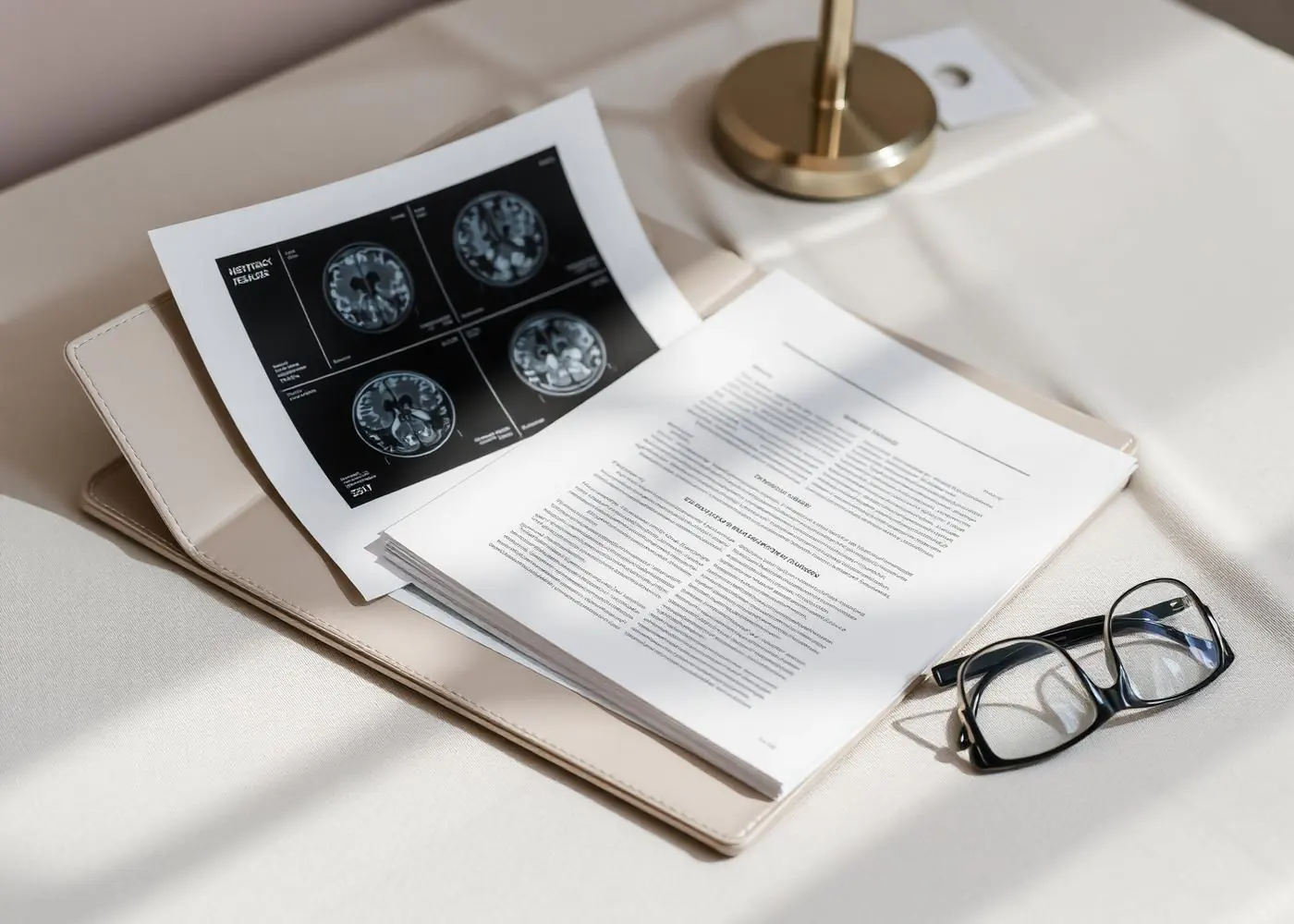
What Your Candidacy Review Covers
- Your MS subtype and disease activity, established from records and imaging, since the strongest evidence is in active disease.
- Your treatment history, including which disease-modifying therapies you have used and how you responded.
- Your current function and goals, which define what a meaningful result looks like for you.
- Your inflammatory and imaging markers, which describe the environment a regenerative approach would enter.
- Your case is reviewed by a physician panel, with neurology input where the case calls for it, and coordinated with your treating neurologist.

What to Ask Any Provider
Which trials in my MS subtype support this, and does my disease activity match the patients they enrolled? Are you proposing stem cells, Muse cells, or an exosome approach, and why for my case? What is being administered, from what source, at what verified cell count, and by what route? Will you coordinate with my neurologist? What would make me a poor candidate?
The Honest Limits
Individual results cannot be predicted or guaranteed. These applications are not FDA approved for multiple sclerosis, and the procedure takes place in Mexico under COFEPRIS regulation, which is not equivalent to FDA approval. Never stop or change prescribed disease-modifying therapy except under the direction of your treating neurologist.
Free consultation with a care consultant, many of our care consultants are registered nurses. No sales reps. No receptionist.
Free consultation with a care team member; many are registered nurses. No sales reps. You speak with a care team member from the first call.