

Aurenza Health
Conditions We Review

Cell therapy after stroke has been tested in randomized trials in more than a thousand patients.

After a stroke, what matters is what remains: strength on one side, use of a hand, speech, balance, and independence in daily life. Cell therapy has been studied for exactly these deficits in randomized human trials, in more than a thousand patients, over two decades. That is a larger and better controlled body of evidence than exists for most applications in this field.

What follows is what those trials found, stated as they were reported, across mesenchymal stem cells and MUSE cells, and how a candidacy review determines whether any of it applies to you.

Aurenza does not claim that stem cell or MUSE cell therapy treats, cures, or reverses stroke or its effects. Individual results vary.

Free consultation with a care consultant, many of our care consultants are registered nurses. No sales reps. No receptionist.

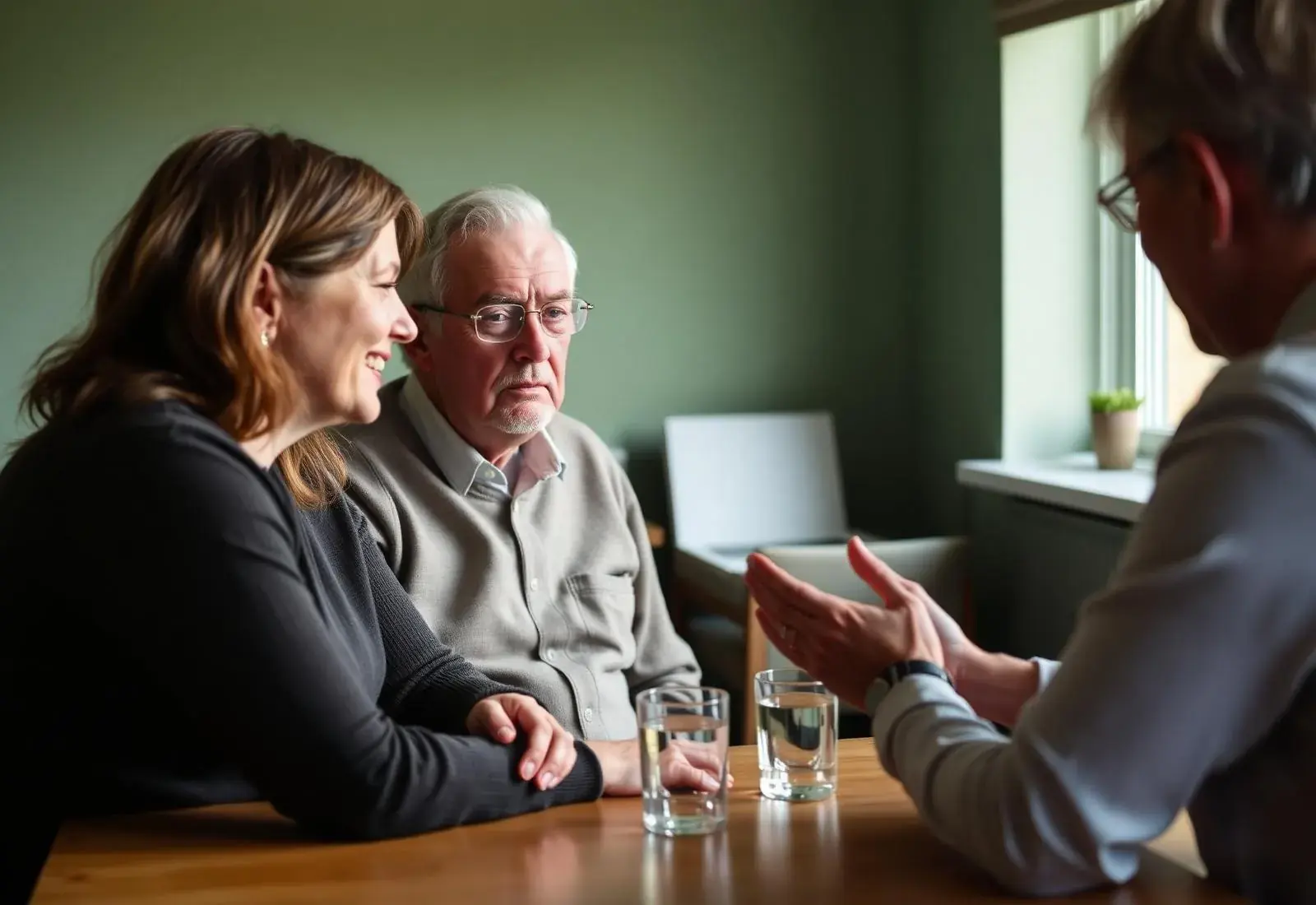
Adult stroke survivor reviewing brain scans with a clinician during a calm consultation.

Mesenchymal Stem Cells: The Largest Evidence Base

Mesenchymal stem cells work primarily by signaling. They lower inflammation and improve the biological environment in which recovering tissue reorganizes. In stroke, that matters because the injury continues after the initial event, driven by an inflammatory response that damages surrounding tissue for weeks. The MSC record in stroke is now large enough to analyze in pooled form.

A 2025 systematic review and meta-analysis in the Journal of Clinical Medicine pooled 18 randomized trials covering 1,026 patients and found cell therapy favored better disability scores, improved daily function on the Barthel Index by approximately 12 points, and improved motor function on the Fugl-Meyer scale by approximately 18 points, with serious adverse events comparable to or lower than control.

The single-trial evidence underneath it is traceable. A randomized clinical trial in Translational Stroke Research (2020) gave intravenous MSCs within two weeks of a moderate to severe stroke and followed patients for two years: motor scores improved significantly against control on both the motor portion of the stroke scale and the motor Fugl-Meyer assessment, and task-related functional imaging showed increased activity in the motor cortex regions controlling the affected limb, while broad disability scales did not change. On durability, a five-year follow-up study published in Stem Cells (2010) tracked 52 patients after severe middle cerebral artery stroke: significantly more patients who received their own MSCs reached a favorable disability level, with no significant side effects and no tumor formation across follow-up, and survival favored the cell group without reaching statistical significance.

Across cell sources, a 2025 network meta-analysis in BMC Neurology of 19 randomized trials and 1,055 patients found no difference in mortality between cell therapy and control, and reported that different cell sources performed differently across neurological, motor, and daily-function outcomes.

The pattern across MSC studies is consistent. Safety is well established, including over years. The efficacy signal concentrates in motor function and daily independence rather than in broad disability measures, and it is more visible in pooled analysis than in any single small trial.

MUSE Cells: Emerging, With the First Randomized Data

MUSE cells are the naturally pluripotent subset that lives within mesenchymal populations, identified by the SSEA-3 marker. They behave differently from the population that contains them: they sense a distress signal released by injured tissue, travel to it through the bloodstream, and can become cell types from all three body layers, including neural lineage. They are given from a donor without tissue matching and without immune suppression.

The first randomized, double-blind, placebo-controlled trial of MUSE cells in stroke, published in the Journal of Cerebral Blood Flow and Metabolism (2023), enrolled 35 patients who received a single intravenous dose of the MUSE cell product or placebo, two to four weeks after an ischemic stroke, and followed them for one year. The trial was designed to establish safety, and it did. The functional findings, which the researchers describe as exploratory, were the encouraging part: 40 percent of the MUSE group reached functional independence at 12 weeks compared with 10 percent of placebo, and at one year 32 percent had little or no residual disability compared with none in the placebo group, with upper limb motor scores favoring the MUSE group from four weeks onward.

Where that sits in the pooled data: a 2025 systematic review and meta-analysis in Scientific Reports covering 13 randomized trials and 872 patients, which included the MUSE trial, found better functional independence at 90 days and a stronger advantage at one year, with no increase in serious adverse events.

This is a single, small, single-center trial whose primary purpose was safety, and its functional results have not yet been confirmed in a larger study. MUSE is emerging for stroke, not established. It is presented here as what it is: the most interesting early signal in this condition, on a foundation that still needs to be built.

Why Cell Therapy May Help After Stroke

A stroke causes injury in two waves. The first is the loss of blood flow. The second is the inflammatory response that follows and continues to damage surrounding tissue for weeks. MSCs act on that second wave, lowering inflammation and improving the conditions under which surviving tissue reorganizes. MUSE cells add a different mechanism: they home to the site of injury and can differentiate into the cell types the tissue needs. Both act on the same underlying process that rehabilitation depends on, which is the brain's capacity to rewire around an injury.

This also matches the timing seen in the data. Benefit in these trials tends to appear late rather than immediately and to grow through the first year, a pattern the investigators attribute to repair and reorganization.

What the Protocols Have in Common

Route. Nearly all randomized data uses intravenous delivery. Intra-arterial and direct approaches have been studied, and no route has established a clear advantage.

Timing. Most of the positive functional data comes from therapy given between two weeks and one month after onset. Evidence in the chronic stage, years after a stroke, is considerably thinner, and an honest review will tell you so.

Dose. Doses vary widely across trials and no optimal dose has been established. The MUSE trial used a single intravenous dose. These are trial parameters, not recommendations; any protocol is set by a physician against your case.

Rehabilitation. Time and intensive rehabilitation remain the foundation of stroke recovery. Nothing described here replaces that. Any cell approach is positioned alongside a rehabilitation program, never instead of one.

Safety. Across pooled analyses, the most common effects are mild and transient, such as low-grade fever, headache, or fatigue, and pooled data has not shown an increase in serious adverse events or in mortality compared with control.

The Honest Line

Now the part a marketing page would skip. The two largest trials in this field were safe and did not meet their primary endpoints. The TREASURE randomized clinical trial, published in JAMA Neurology (2024), gave intravenous allogeneic cell therapy within 18 to 36 hours of ischemic stroke onset to 206 participants: it was safe, it did not improve short-term outcomes at 90 days, and its exploratory analyses suggested possible signals in patients with large infarcts and younger patients, uncorrected for multiple comparisons. Its predecessor, the MASTERS trial, is discussed in the same publication and followed the same pattern. And even the pooled analyses do not fully agree on which measures move: a 2024 meta-analysis in BMC Neurology of nine trials found significant improvement on the stroke severity scale but not on the Barthel Index or modified Rankin score.

Two more boundaries, stated plainly. The randomized evidence is concentrated in ischemic stroke; evidence in hemorrhagic stroke is far thinner. And no study shows a guarantee that it works every time, or that it will work for you. The honest description of this field is a credible and growing evidence base rather than a proven therapy.

Why This Is Exactly Where a Candidacy Review Comes In

Whether any of this applies to you depends on the type, size, and timing of your stroke, the deficits that remain, and where you are in rehabilitation, because the trials enrolled specific patients at specific timepoints. That is the gap between what is published and what is right for you, and it is what a candidacy review closes. Your records, imaging, and rehabilitation status are reviewed by a physician panel, coordinated with your treating neurologist, and if the picture does not support moving forward, you will be told that plainly. That is where to start.

Free consultation with a care consultant, many of our care consultants are registered nurses. No sales reps. No receptionist.

Clinician organizing stroke imaging and rehabilitation records for a case review.

What Your Candidacy Review Covers

Your stroke type and imaging, ischemic or hemorrhagic, confirmed on your actual scans, since the evidence is concentrated in ischemic stroke.

Time since onset, because most of the positive data comes from the early window and chronic-stage evidence is thinner.

Your current deficits and rehabilitation program, which define what a meaningful result would look like and what any approach would sit alongside.

Your medications and cardiovascular picture, including anticoagulation and stroke-prevention therapy, which nothing here ever replaces.

Your case is reviewed by a physician panel, with neurology input, coordinated with your treating physicians.

What to Ask Any Provider

Which randomized trials support this at my stage and timing, and did they enroll patients like me? Are you proposing mesenchymal stem cells or MUSE cells, and why for my case? What is being administered, from what source, at what verified cell count, and by what route? How does this fit alongside my rehabilitation program? What would make me a poor candidate?

The Honest Limits

A stroke is a medical emergency. Nothing on this page applies to acute stroke care; if you or someone near you may be having a stroke, call emergency services immediately. Individual results cannot be predicted or guaranteed. No cell therapy is FDA approved for stroke, and procedures take place in Mexico under COFEPRIS regulation, which is not equivalent to FDA approval. Rehabilitation and prescribed stroke-prevention medications remain the foundation of care and are never replaced or delayed by anything described here.

Free consultation with a care consultant, many of our care consultants are registered nurses. No sales reps. No receptionist.

Free consultation with a care consultant, many of whom are registered nurses. No sales reps. No receptionist.